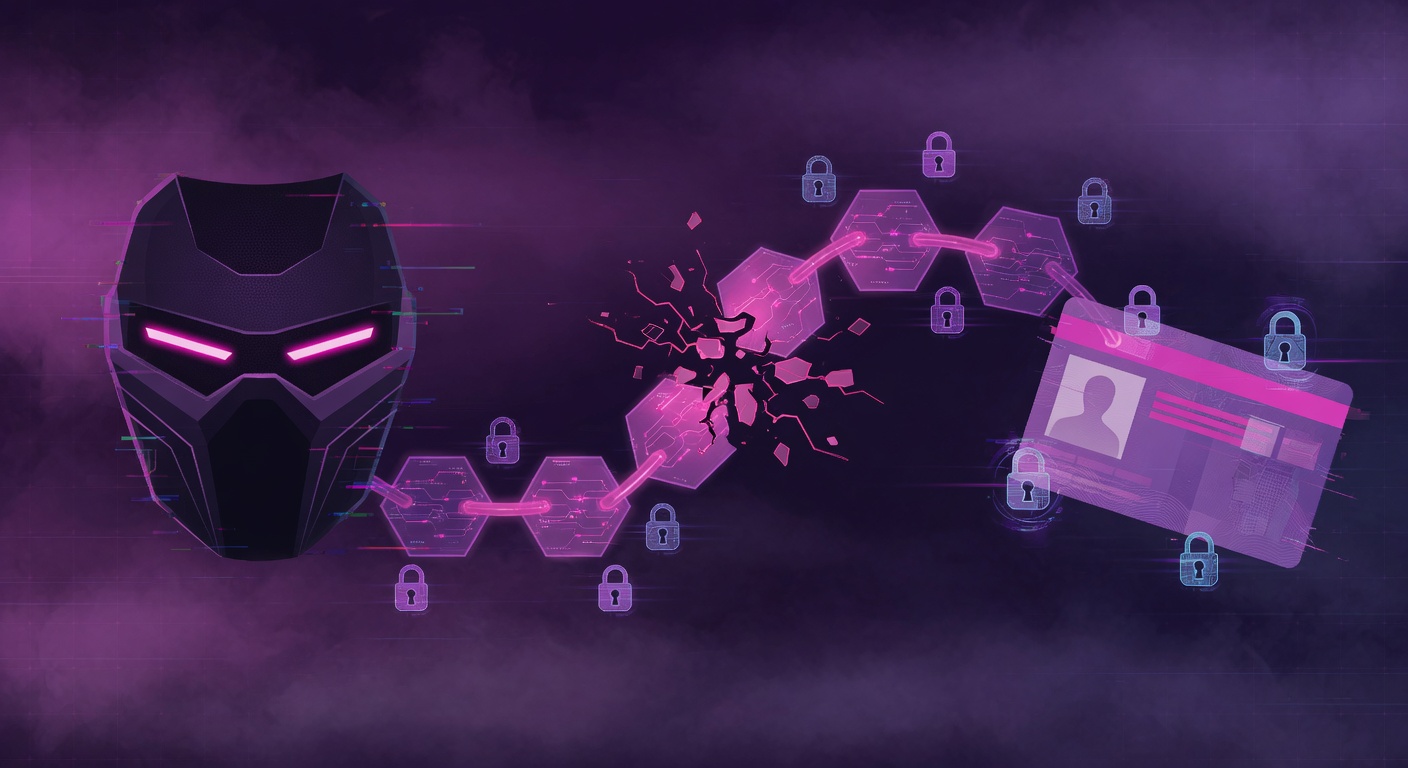
Most doxxing victims assume their attackers had access to some private database. Almost none of them did. Public doxxing in 2026 is overwhelmingly built from one mechanism: chained public links between a person's online persona (Twitch handle, Discord tag, Reddit username, gamer alias) and one real-world identifier (an email, a phone number, a real name).
Not ready yet? Run a free breach check on this email
We’ll email that address a link. Open it and we check it against 13.1B+ leaked records — no account needed. Continuous monitoring & alerts are part of Protection.
Once one of those links exists in public, the rest fall like dominoes.
How the chain forms
A typical chain that ends in a doxx looks like this:
- The handle leak. A streamer's Twitch username, "wraith.shadow," appears in a Reddit thread next to a Discord tag, "wraith#4422".
- The breach overlap. The same Discord tag appears in a 2022 credential-stuffing dump alongside a Gmail address: "alex.[redacted]@gmail.com".
- The cross-reference. That Gmail address appears in a 2019 LinkedIn scrape paired with a real name and a city.
- The voter-record hop. Voter records (public in many U.S. states) tie that real name + city to a home address.
That four-step chain is what 80% of "how did they doxx me?" cases turn out to be. No insider, no zero-day, no nation-state attacker — just publicly-available data that's been correlated through one piece of leaked overlap.